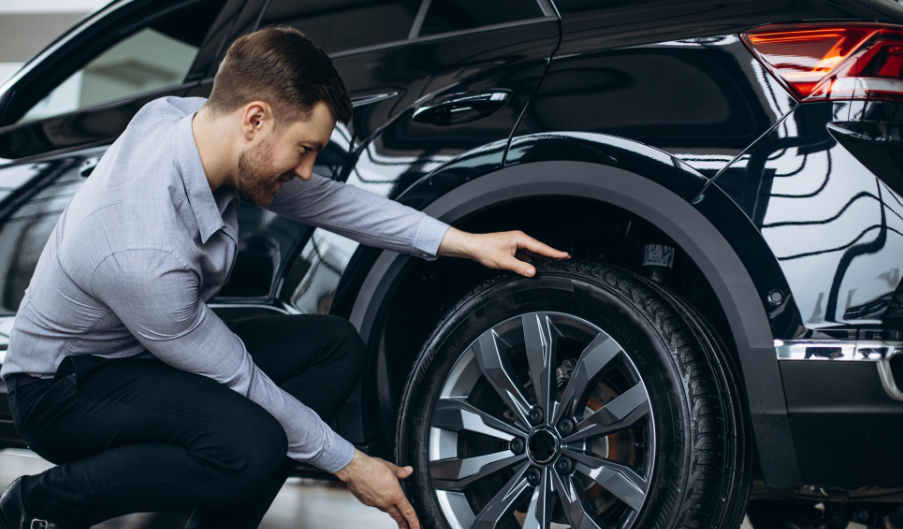
Tires are easy to overlook until a warning light appears or a slow leak becomes obvious. Yet tire pressure affects how a vehicle handles, how its tires wear, and how efficiently it uses fuel. Checking pressure regularly is a small maintenance habit that can help prevent avoidable problems.
The important detail is using the pressure recommended for your vehicle and tire setup, not simply filling tires until they look firm.
Where to Find the Correct Pressure
For most passenger vehicles, the recommended cold tire inflation pressure appears on a label inside the driver’s door area or in the owner’s manual. The number printed on the tire sidewall is generally a maximum rating for the tire, not the recommended inflation pressure for the vehicle.
Front and rear tire recommendations may differ. If your vehicle uses a different tire size or has special loading instructions, check the manufacturer’s guidance before making adjustments.
Why Underinflated Tires Matter
When pressure is too low, a tire can flex more than intended as it rolls. That can increase heat buildup, accelerate uneven wear, and increase rolling resistance. Underinflation may also affect handling and the tire’s ability to perform safely.
A vehicle working against unnecessary rolling resistance may use more fuel. The exact effect depends on the vehicle, driving conditions, and degree of underinflation. Do not expect dramatic fuel savings from a tire that was already at the recommended pressure.
Why Overinflation Is Not the Answer
Adding more air than recommended does not create an unlimited efficiency advantage. Excessive pressure can affect ride comfort, wear patterns, and the tire’s contact with the road. The safest target is the vehicle manufacturer’s guidance, adjusted only where instructions specifically call for it.
A tire that looks round is not necessarily correctly inflated. Use a reliable pressure gauge rather than judging by appearance.
Check Tires When Cold
Pressure recommendations generally refer to cold tires, meaning the vehicle has been parked long enough for tires to cool, according to the manufacturer’s instructions. Driving warms tires and temporarily changes pressure readings.
Check all tires at an appropriate interval and before long trips. Include the spare if your vehicle carries an inflatable spare tire. After adjusting pressure, replace valve caps and follow the vehicle manual for any tire-pressure monitoring system reset procedure.
Watch for Other Warning Signs
Pressure is only part of tire care. Look for uneven tread wear, visible damage, embedded objects, bulges, or persistent air loss. A tire that repeatedly loses pressure should be examined by a qualified professional rather than repeatedly topped off without investigating the cause.
Rotations, wheel alignment, and replacement decisions should follow the vehicle and tire manufacturers’ recommendations, with help from a qualified technician when needed.
Combine Maintenance With Driving Habits
Smooth acceleration, avoiding unnecessary heavy loads, and keeping the vehicle maintained may also affect fuel consumption. Proper tire pressure supports these habits but cannot compensate for aggressive driving or mechanical problems.
Keep a simple record of checks and maintenance. If your fuel economy changes noticeably, consider weather, traffic, driving patterns, and vehicle condition before assuming one explanation.
Final Thoughts
Correct tire pressure is an accessible maintenance task with safety and efficiency benefits. Find the recommended pressure, check tires when cold, and investigate repeated air loss promptly. A few careful minutes can support more predictable driving and help tires perform as intended.